Cooling Down After Sauna: A Safe Autumn Guide

Cooling down after sauna is just as important a part of the sauna ritual as heating up. This matters especially in autumn, when cool air, wet leaves and sharper temperature changes wait outside the door. The right pace helps you feel well and keeps a relaxing sauna evening from becoming an endurance test.
We previously explained how to prepare for a safe and pleasant autumn sauna evening. Now we take the next step: what to do after leaving the hot room, how to cool down between rounds, and how to recognise when your body is ready for the next heating cycle.
Why cooling down after sauna is more than a pleasant break
Heat widens the blood vessels in the skin, increases sweating and causes fluid loss. After leaving the sauna, the body needs time to adjust gradually to a cooler environment. Good cooling is therefore not one sudden leap into the cold, but a calm transition from heat to coolness and then to rest.
The contrast may feel invigorating, yet cold water and very low temperatures also have an immediate effect: breathing may accelerate, while pulse and blood pressure may change. Scientific reviews show that the possible benefits of cold exposure are still being studied, and the evidence is not strong enough to regard an ice bath as an essential part of a healthy sauna ritual. Put simply, cold is not a competition and the most extreme option is not automatically the best one.
Cooling down after sauna step by step
1. Leave the bench before you begin to feel unwell
Do not wait for dizziness, nausea or weakness. Finish the sauna round while you still feel good. Stand up slowly, especially from the upper bench, and pause for a few seconds or sit lower. To understand how heat feels at different settings, read our guide to the right balance of temperature and humidity in a sauna.
2. Give your body a short transition
Before stepping into a cold shower or going outside, spend a few minutes in the changing room or another moderately cool place. Breathe calmly, do not rush and pay attention to how you feel. This simple transition is especially useful in autumn, when outdoor air may be much colder than the sauna room.
3. Choose a level of coolness that suits you
For a beginner, fresh air or a lukewarm shower that is gradually made cooler is enough. An experienced sauna-goer may choose a cold shower, pool or brief immersion in cool water if it is familiar, safely accessible and they feel well. Start with the feet and hands rather than the head, and never force yourself to remain in the cold longer than feels comfortable.
4. Dry off and rest
After cooling down, dry yourself and put on a robe or wrap up in a dry towel. Sit for 10–15 minutes, drink water or unsweetened herbal tea, and allow your breathing and pulse to settle. In our selection of sauna teas you will find several flavours for a peaceful end to the evening, although plain water is also ideal for replacing fluids.
5. Begin the next round only when you feel stable
There is no compulsory number of minutes. You are ready when breathing is calm, there is no dizziness, shivering or unpleasant pounding of the heart, and your body feels comfortable again. If you still feel too hot, rest longer. If you are already cold, dry off and warm up in the anteroom instead of rushing straight to the hottest bench.
Which cooling method is right for you?
Fresh air
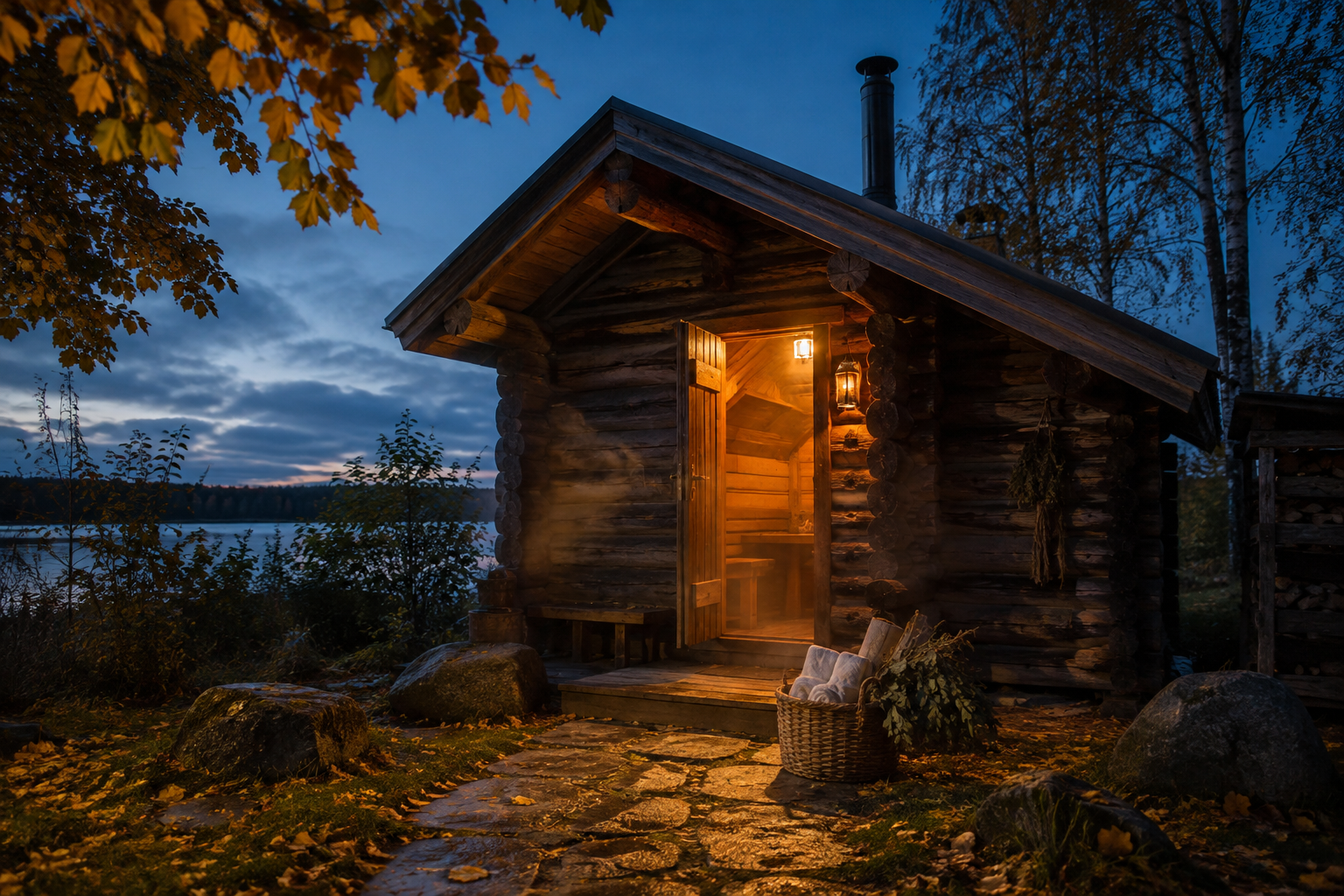
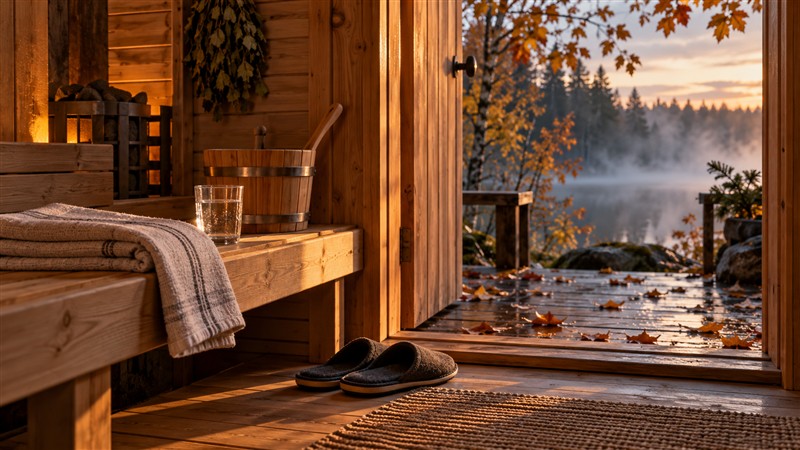
This is the simplest method and is often sufficient in autumn. Step onto a terrace or stand by an open door, but choose a safe, well-lit spot. Wet leaves, moss and wooden boards can be slippery, so stable sauna slippers are useful. In cold or windy weather, stay outside only briefly and avoid shivering.
A lukewarm or cool shower
This is easy to control and suits beginners or anyone who does not want a sharp temperature contrast. Start with comfortable water and lower the temperature gradually. A shower can be stopped immediately whenever needed.
Cold water or swimming
This is the most intense option and is not necessary for everyone. Never enter cold water alone, never jump into unfamiliar water, and make sure getting out is safe. Water temperature may fall faster than expected in autumn, so summer experience does not automatically mean readiness for a cold swim in October or November.
Common mistakes when cooling down after sauna
- Too sudden a contrast. Jumping directly from a very hot bench into icy water is unnecessary. A short pause lets you assess how you feel.
- Staying cold too long. Shivering is not a sign of quality; it means it is time to dry off and warm up.
- Alcohol during sauna. It can impair judgement, increase dehydration and raise the risk of falls.
- Ignoring slippery surfaces. Wet floors, steps and outdoor walkways need particular care in autumn.
- Standing up too fast. Rising suddenly after heat can cause dizziness. Move calmly and hold on if needed.
- Ignoring warning signs. Chest pain, fainting, confusion, marked shortness of breath or persistent palpitations are not a normal sauna feeling. Stop the ritual and seek medical help when necessary.
Autumn sauna cooling checklist
Before the first round, keep these items within reach:
- a dry towel or robe;
- drinking water and, if desired, warm unsweetened tea;
- sauna slippers for safe movement;
- good outdoor lighting and a non-slip path;
- a comfortable place to rest;
- a sauna meter to avoid excessive heat.
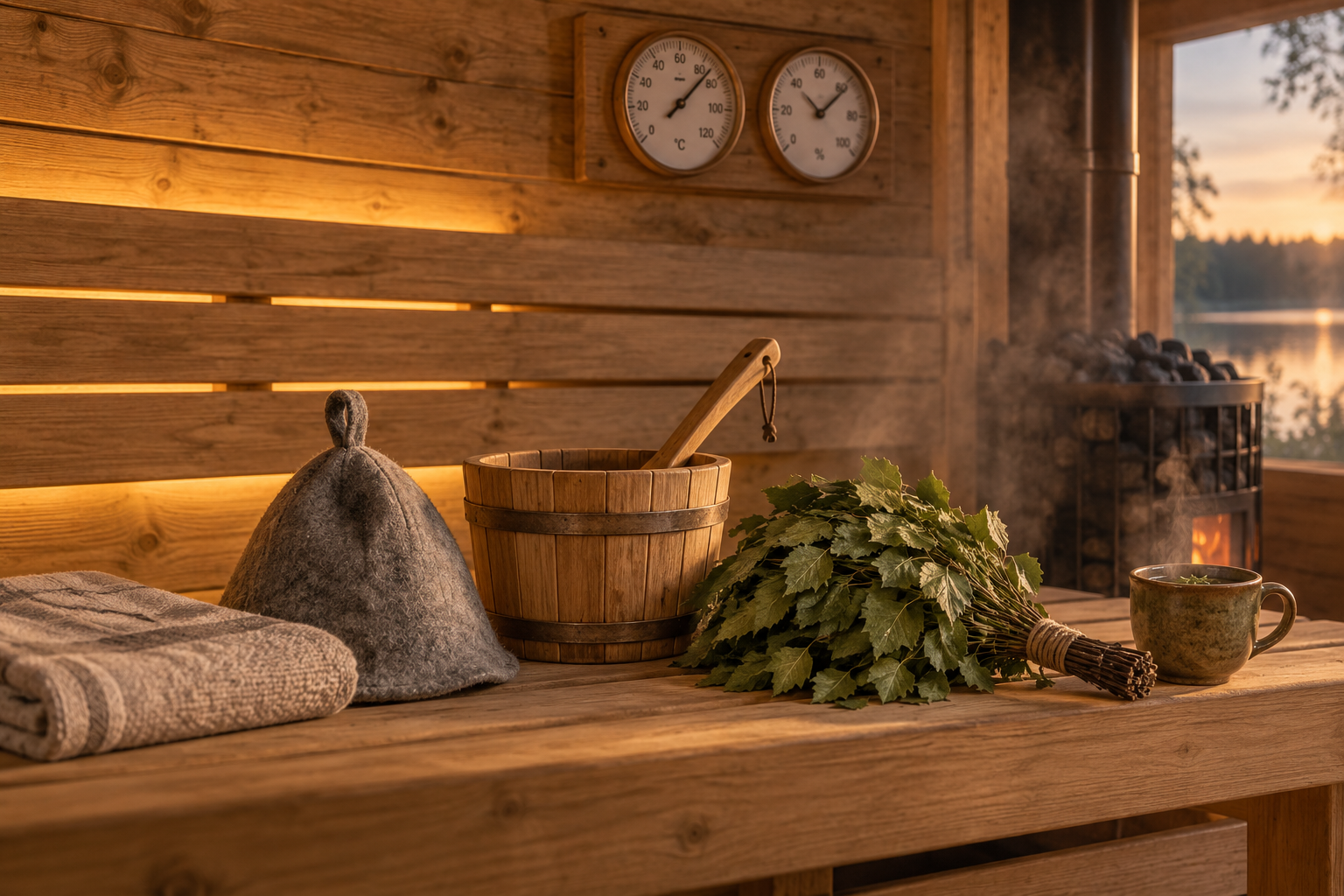
Temperature and humidity are easier to understand when both readings are visible together. Browse our thermometers, hygrometers and sauna clocks. If you are still packing your sauna bag, see “What should you take to the sauna for the first time?”.
Who should be especially careful?
People with cardiovascular disease, uncontrolled blood pressure, a history of fainting, pregnancy or other health concerns should ask a doctor before combining heat and cold. Children’s sauna routines must also be adapted to age and wellbeing, avoiding extreme heat and cold. This article provides general information and does not replace individual medical advice.
Conclusion: the right coolness is the one that leaves you feeling well
Good cooling down after sauna is not measured by the thickness of ice or the minutes spent in the cold. Its purpose is to help the body move gradually from heat to rest while maintaining a clear head and pleasant wellbeing. In autumn, the safest sequence is simple: leave the hot room calmly, pause and breathe, choose suitable coolness, dry off, drink and do not rush.
If your sauna evening is still being planned, begin with our autumn sauna preparation guide, then return to this article for the next step. This is how a thoughtful sauna ritual develops, with every action in its proper place.
Sources and further reading: scientific reviews of the physiological effects of sauna, cold-water immersion and heat–cold contrast procedures: PubMed — sauna bathing review, PubMed — cold-water immersion review, PubMed — contrast therapy systematic review.
Real things for your sauna