
What Is the Right Sauna Temperature and Humidity?

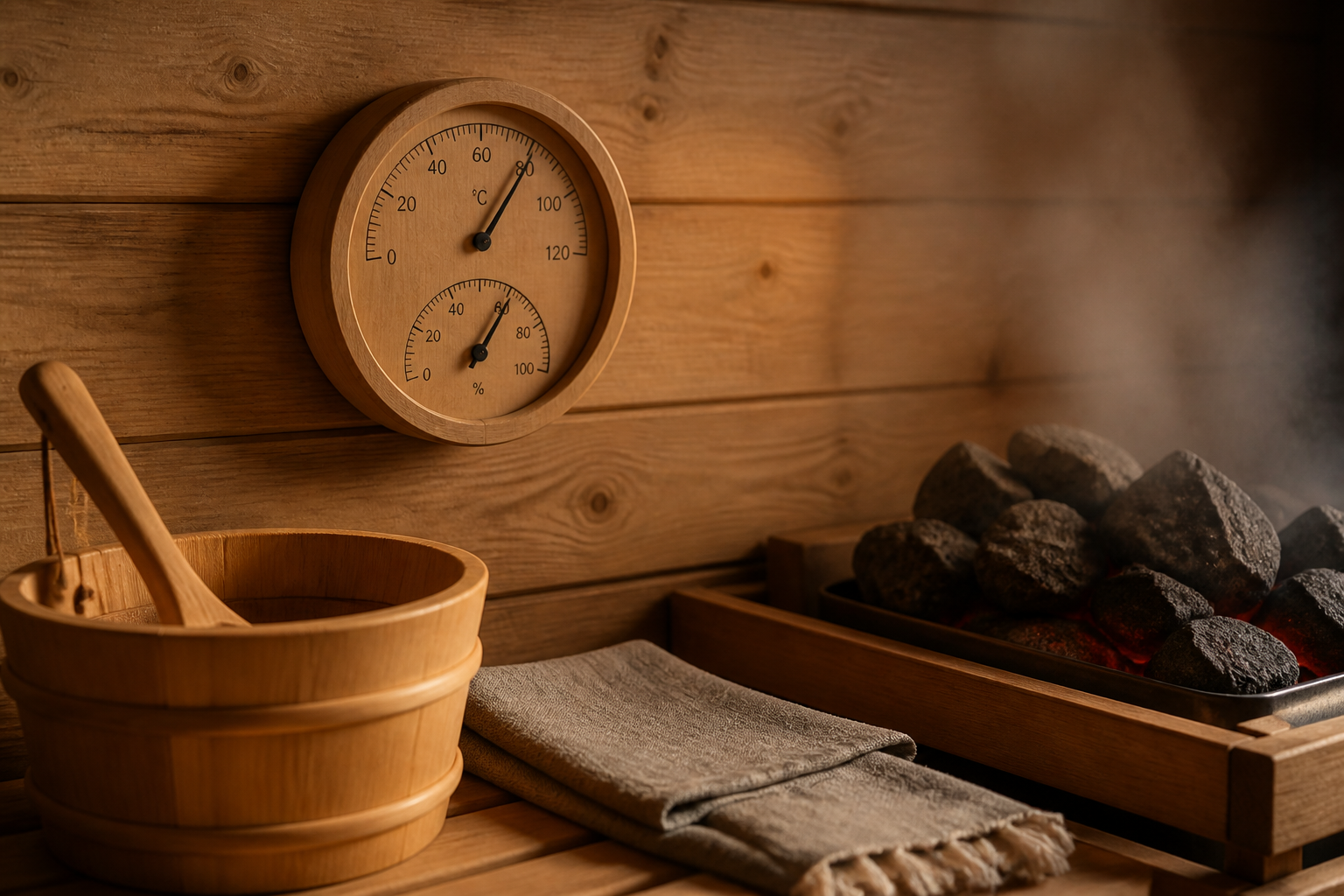
Sauna temperature and humidity work together: the same temperature can feel pleasantly warm in dry air and overwhelmingly hot after water is thrown on the stones. There is therefore no single perfect number for every sauna or every person. The right balance depends on the sauna type, ventilation, where you sit and how your body feels.
Quick answer: a traditional sauna is often comfortable at 60–80 °C with moderate, changing humidity; a dry Finnish sauna commonly operates at 70–100 °C with low humidity between steam bursts; a steam room is much cooler, usually around 40–50 °C, but the humidity is close to 100%.
Why the same temperature can feel different
The thermometer shows air temperature, but it does not describe the whole microclimate. Humidity affects how easily sweat evaporates and how intensely the body perceives heat. A ladle of water on hot stones creates a brief rise in humidity and a wave of steam. The thermometer may barely move, while the sensation changes immediately.
Air circulation matters too. If it feels stuffy or breathing becomes difficult, do not simply lower the temperature and endure it. Check the ventilation and read our guide Why is it hard to breathe in the sauna?.
Recommended ranges by sauna type
Traditional sauna
For a gentle, humid sauna ritual, start at about 60–70 °C and add water to the stones in small amounts. Experienced bathers may prefer 70–80 °C, but more heat is not automatically better. The goal is calm breathing, pleasant sweating and controlled steam.
Dry Finnish sauna
A dry sauna is commonly heated to 70–100 °C. Humidity remains relatively low between steam bursts, so the higher temperature may feel more tolerable than it would in humid air. Beginners should start lower, use shorter sessions and move to a lower bench if necessary.
Steam room
A steam room usually stays near 40–50 °C, yet almost saturated air makes the heat feel intense. A dry-sauna target of 80 or 90 °C must never be applied to a steam room.
How to measure the sauna climate correctly
A thermometer measures temperature, a hygrometer measures relative humidity, and a combined thermo-hygrometer shows both. Explore our sauna thermometers, hygrometers and clocks, including a practical sauna thermo-hygrometer and the natural wooden SAUNA thermometer up to 140 °C.
Place the instrument on a wall away from the heater, door and ventilation opening, approximately at the head height of a seated bather. Do not mount it directly above the heater: that spot is locally hotter and gives a misleading reading. Compare readings over several sessions and allow a new instrument time to acclimatise.
Why two gauges may show different readings
Temperature is not uniform throughout the room. Hot air rises, so the upper bench can be considerably warmer than the floor area. A gauge close to the door reacts to cooler incoming air, while one near the heater reacts to radiant and local heat. Analogue instruments also need time to settle after the sauna heats up or after a strong steam burst. Small differences are normal; what matters most is using the same correctly chosen position and observing the trend from one session to the next.
For a useful comparison, heat the sauna in the usual way, allow the climate to stabilise and note both readings before throwing water. Then watch how the humidity rises and falls after a small ladle. This gives a much more practical picture than chasing a single “perfect” number.
How to adjust temperature and humidity
- Change one factor at a time: temperature, amount of water or session length.
- Throw water on the stones in small portions and wait for the sensation to settle.
- If the steam feels sharp, use less water, sit lower or reduce the temperature.
- If the air feels heavy, improve ventilation; aromas cannot replace fresh air.
If you use fragrances, choose products made for saunas, follow the stated dosage and never pour undiluted essential oil directly onto the stones. See how to choose the best sauna scent.
If the sauna feels too dry
Do not immediately pour a large amount of water on the stones. Add a small ladle, wait for the steam wave to pass and assess the result. A slightly lower temperature with controlled steam is often more comfortable than very high heat and repeated large splashes. Make sure the stones are properly heated and that water is applied only as recommended for the heater.
If the air feels heavy
Fresh-air supply and exhaust must work together. A fragrance can make the room smell pleasant, but it cannot remove carbon dioxide or replace ventilation. Reduce the number of bathers if the room is crowded, air the sauna between rounds and leave immediately if breathing remains uncomfortable.
Safety comes before numbers
A sauna is not an endurance test. Leave immediately if you feel dizzy, nauseous, weak, confused, short of breath or experience unpleasant palpitations. Cool down gradually and drink water. Alcohol and sauna heat are an unsafe combination. People with cardiovascular conditions, uncontrolled blood pressure, pregnancy or other health concerns should consult a healthcare professional. This article provides general information and is not medical advice.
Frequently asked questions
Is 100 °C too hot for a sauna?
It can fall within the range of a dry sauna, but it is neither necessary nor suitable for everyone. With more humidity, that temperature becomes extremely intense.
What sauna temperature is best for a beginner?
Begin moderately, often around 60–70 °C in a traditional sauna, with little steam and short rounds.
Which matters more: temperature or humidity?
Both. Temperature shows how hot the air is; humidity strongly changes how that heat feels. A thermo-hygrometer gives the clearest picture.
Can a thermometer be installed above the heater?
No. Directly above the heater it usually records a locally excessive temperature that does not represent the conditions around a seated bather. Choose a wall away from the heater, door and air vent.
Conclusion
The correct sauna temperature is not the highest number on the dial. It is the balance at which you can breathe calmly, warm up pleasantly and control the steam. Start moderately, adjust gradually and listen to your body.
Want clear control of your sauna climate? Browse our thermometers, hygrometers and clocks.
Sources consulted: Latvijas Vēstnesis — hygiene requirements for public saunas; Latvia Travel — sauna traditions; North American Sauna Society — sauna experience.
