How Often Should You Sauna? Find Your Ideal Sauna Rhythm

Once you know how to follow a sauna ritual step by step, the next natural question is: how often should you sauna? Once a week, several times a week, or only when your body asks for it?
There is no single schedule that suits everyone. A good sauna rhythm depends on your experience, the temperature and humidity, the length of each session, cooling habits, sleep, stress, hydration and your general health. The aim is not to collect as many sauna sessions as possible, but to find a rhythm after which you feel calm, refreshed and well recovered.
Is there one correct sauna frequency?
No. A systematic review of clinical studies found that sauna bathing may support cardiovascular and other health outcomes, but the optimal frequency and duration have not been established for every person. This is why general numbers should be treated as orientation rather than a prescription.
Large Finnish observational studies have found associations between more frequent sauna use and lower cardiovascular and all-cause mortality. Participants were commonly grouped into one, two to three, and four to seven sauna sessions per week. These results are interesting, but they do not prove that everyone should immediately sauna four to seven times weekly. The studies describe associations in a population with a long-established sauna culture, not an individual medical recommendation.
A sensible starting point for beginners
If you are new to sauna, start calmly: once a week or once every two weeks is a practical rhythm. Keep the first sessions moderate, use shorter rounds and allow enough time for rest between them. The body needs time to learn how it responds to heat, humidity and cooling.
When the experience feels pleasant and recovery is good, you can gradually adjust the rhythm. Some people enjoy one longer ritual each week; others prefer two shorter, gentler sessions. Neither option is automatically better.
When can 1–3 sauna sessions per week be suitable?
For an experienced and generally healthy person, one to three sessions per week can be a comfortable regular rhythm, provided the sauna is not excessively hot, recovery is good and there are no warning symptoms. Regularity is more useful than forcing intensity.
The actual load is created by several factors together:
- Temperature and humidity. Higher heat and stronger steam place more strain on the body.
- Duration and number of rounds. Three short rounds are not the same as one very long stay in the hot room.
- Cooling intensity. Cold water, snow or a cold plunge is a stronger stimulus than a lukewarm shower and fresh air.
- Sleep, stress and hydration. A tired or dehydrated body may tolerate the same sauna much less comfortably.
- Your individual health. Medication, blood-pressure changes, pregnancy and chronic illness may require personalised medical advice.
How to know that your sauna rhythm suits you
A suitable rhythm is usually easy to recognise. You look forward to the sauna, heat feels manageable, you recover without unusual fatigue, sleep remains good and you feel well the next day. Thirst after sauna is normal, but it should improve with sensible hydration.
Keep a simple mental note after each session: how did you feel during the heat, after cooling and the next morning? Over a few weeks, this gives a more useful answer than blindly copying someone else’s schedule.
Signs that you should slow down
Reduce the intensity or frequency and leave the hot room if you experience dizziness, nausea, unusual weakness, headache, palpitations, chest discomfort or difficulty recovering. Do not try to “push through” these signals.
Alcohol and sauna are a poor combination because alcohol can increase dehydration and impair judgement. Drink water, take unhurried breaks and avoid turning the ritual into a competition.
Three sample sauna rhythms
1. A calm beginner’s rhythm
One session every one or two weeks, two short rounds, mild steam and gradual cooling. This gives you time to observe the body’s response without unnecessary pressure.
2. A regular weekly ritual
One sauna evening per week with two or three rounds, rest, hydration and a relaxed finish. For many people, this is the easiest rhythm to maintain over the long term.
3. Two or three shorter sessions per week
This can suit experienced sauna users who recover well and choose moderate intensity. If sleep, energy or wellbeing worsens, reduce either the frequency or the heat.
Cooling and recovery are part of the rhythm
Frequency cannot be separated from recovery. Leave enough time between hot-room rounds, drink water and cool down gradually. Our guide to safe cooling after sauna explains how to make the transition from heat comfortable and controlled.
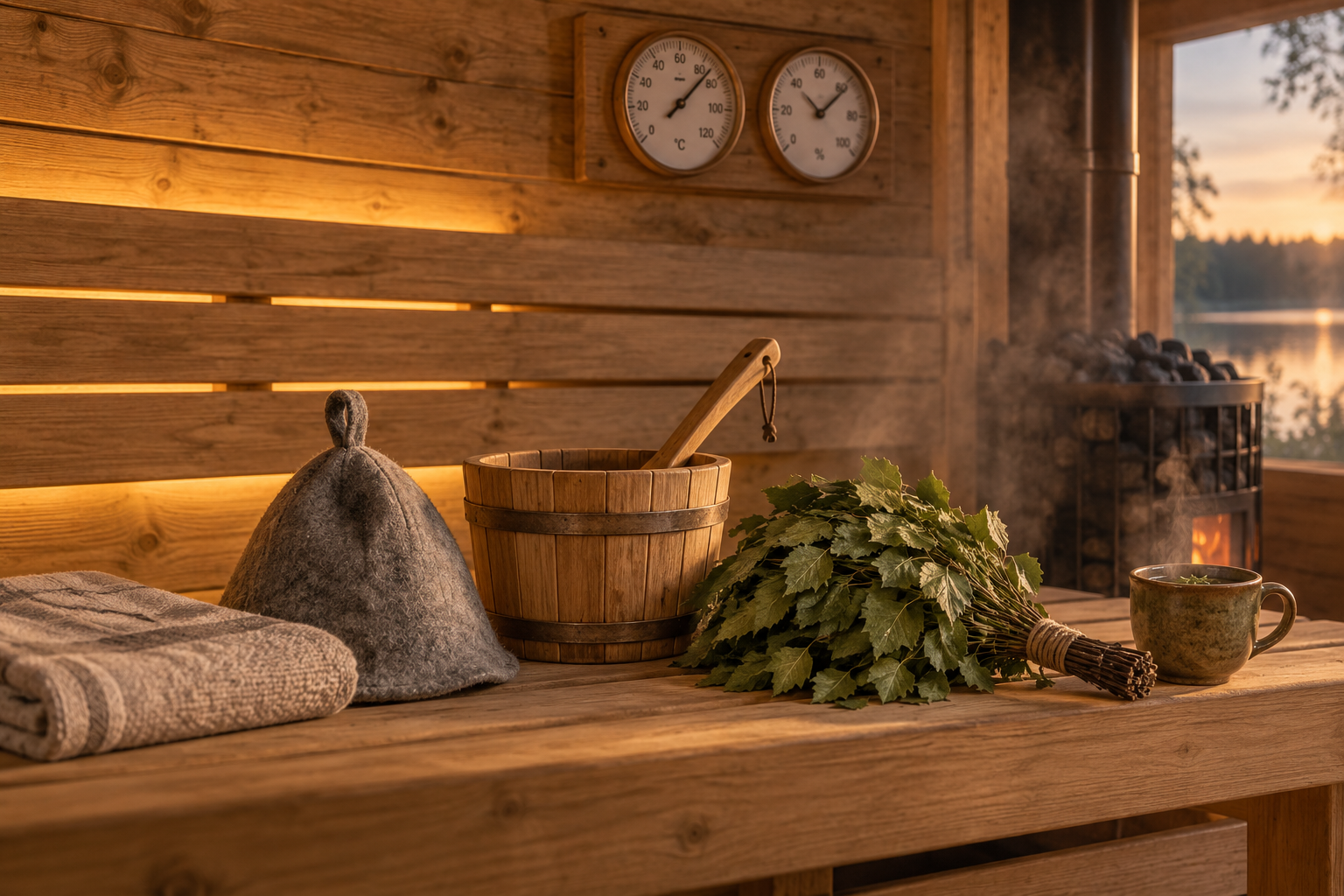
The right accessories also make the ritual easier to manage: a thermometer and hygrometer help you understand the sauna climate, while comfortable textiles, a sauna hat and suitable aromas support a calm routine. You can explore the selection in the Istas Pirtslietas online shop.
Common mistakes when choosing sauna frequency
- Copying another person’s schedule without considering your own experience.
- Increasing both heat and frequency at the same time.
- Staying in the hot room for a fixed number of minutes despite discomfort.
- Ignoring hydration, sleep and recovery.
- Using sauna when ill, feverish or after drinking alcohol.
Who should speak with a doctor first?
Seek individual medical advice if you have unstable heart disease, uncontrolled blood pressure, a history of fainting, serious chronic illness, are pregnant, take medication that affects blood pressure or fluid balance, or are unsure whether heat exposure is suitable for you. Stop immediately and seek medical help for chest pain, severe shortness of breath or fainting.
This article is general educational information and does not replace medical advice.
The best rhythm is the one you can enjoy safely
For a beginner, a calm weekly or fortnightly sauna is a sensible starting point. An experienced person may enjoy sauna more often, but frequency only makes sense when intensity, cooling and recovery are balanced. Listen to your body, increase the load gradually and let sauna remain a restorative ritual rather than an obligation.
For more practical guidance, continue with our step-by-step sauna ritual and explore other advice in the Istas Pirtslietas blog.
Sources
- Association between sauna bathing and fatal cardiovascular events
- Cardiovascular and other health benefits of sauna bathing
- Sauna bathing and all-cause mortality
- American Heart Association: physical activity and blood pressure
Real things for your sauna