
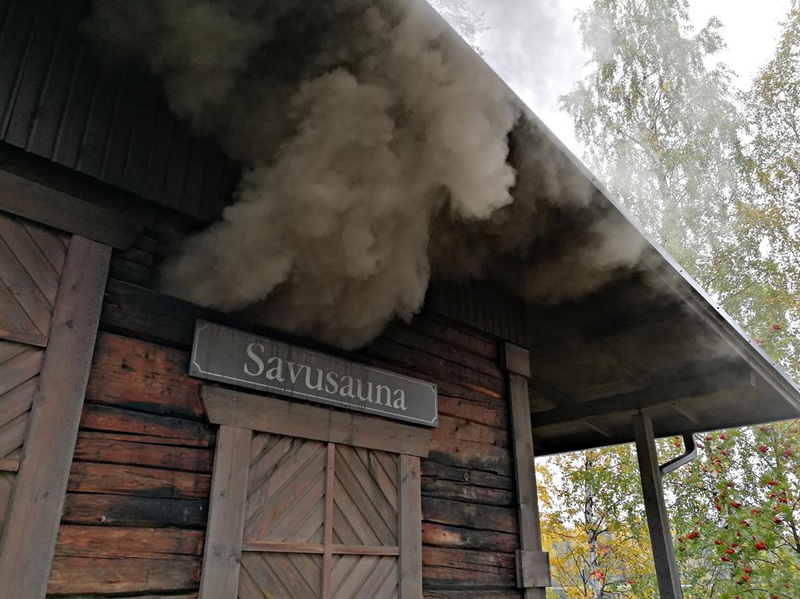
Võromaa Smoke Sauna Tradition in southern Estonia has not become a museum exhibit, even more than a decade after being inscribed on UNESCO’s Representative List of the Intangible Cultural Heritage of Humanity. Smoke saunas are still heated, families continue to gather in them, sauna whisks are prepared, and knowledge is passed from one generation to the next. In autumn 2026, public smoke sauna evenings are also being held in Võru County, giving visitors an opportunity to experience this ancient sauna tradition in practice.
Võromaa in southeastern Estonia is one of the most fascinating sauna-culture regions in the Baltic states. Here, the smoke sauna, or suitsusaun, is not simply an old building or a tradition demonstrated for tourists. UNESCO describes it as part of the everyday life of the Võro community, encompassing much more than the act of bathing itself.
The tradition includes knowledge of heating and using the sauna, making sauna whisks, building and repairing smoke saunas, and smoking meat. This broad collection of knowledge and practices was inscribed on UNESCO’s Representative List of the Intangible Cultural Heritage of Humanity in 2014.
Võromaa Smoke Sauna Tradition begins with a sauna without a chimney
The most important technical feature of a smoke sauna is simple – it has no chimney. While the sauna is being heated, smoke from the stove enters the room itself, filling the space and gradually blackening the walls and ceiling with soot. Once the stones and the room are sufficiently hot, the fire is allowed to die down and the smoke is ventilated out.
Only then does the actual sauna session begin. The heat stored in the stove, stones and surrounding structures remains for long enough to enjoy the sauna without continuing to burn wood during bathing.
This type of sauna requires patience, experience and knowledge. It cannot simply be switched on half an hour before guests arrive. Someone must know how much firewood is needed, how to heat the stove correctly, when the sauna has reached the right temperature and how long the room must be ventilated before people can safely enter.
UNESCO protects knowledge, not one particular building
This is one of the most important aspects of understanding the Võromaa smoke sauna. UNESCO has not protected one specific historic sauna building. The heritage being safeguarded is the tradition and knowledge required to keep it alive.
This includes the skills needed to build and maintain a smoke sauna, heat it correctly, prepare sauna whisks and use plants, as well as knowledge of the sauna process and the family customs associated with it.
UNESCO emphasises that these skills have traditionally been passed down within families. An older family member often takes responsibility for preparing the sauna, while children participate in the process and gradually learn the necessary skills.
That is how intangible cultural heritage remains alive – not simply by being documented, but by being practised repeatedly.
Saturday is traditionally sauna day
Interestingly, Võromaa tradition also has a strong parallel with Latvian sauna culture. UNESCO notes that families traditionally visit the smoke sauna on Saturdays, as well as before major holidays and important family occasions.
The sauna is not used merely to wash the body. It is a place for relaxation, calming both body and mind, conversation and spending time together. Families may also invite one another to sauna, giving it an important social function.
This reveals a clear similarity between the traditional sauna cultures of southern Estonia and Latvia. Sauna is not simply a hot room – it is a particular time and place where people deliberately step away from everyday work and spend time together.
Sauna whisks are an essential part of the tradition
Sauna whisks are not decorative accessories in Võromaa. The knowledge of preparing them is specifically recognised by UNESCO as part of the smoke sauna tradition.
Water is poured onto heated stones to create hot, humid steam, while the body is gently whisked with bundles of leafy branches. After warming, whisking, resting and traditional wellbeing practices, people go outside to cool down and rinse themselves with water. This cycle may be repeated several times.
The smoke sauna experience is therefore shaped by much more than its unusual heating method. It is a complete sequence in which heat, steam, plants, cooling and time spent together all have a role.
Meat was traditionally smoked in the sauna
One of the more unusual aspects of the Võromaa smoke sauna tradition is meat smoking. The same room used for sauna bathing was historically also used for preparing food.
The smoke filling the room during heating made it possible to smoke meat inside the sauna. For this reason, knowledge related to meat smoking is also recognised in UNESCO documentation as part of the same cultural tradition.
For a modern visitor accustomed to separate saunas, kitchens and smokehouses, combining these functions may seem unusual. In traditional rural life, however, one building often served several practical purposes.
The tradition remains alive in 2026
The Võromaa smoke sauna is not a tradition that survives only in UNESCO documents. Public smoke sauna evenings continue to be organised in Võru County during autumn and winter 2026.
Ärni suitsusaun in the Vatsa area offers opportunities to visit a traditional smoke sauna on selected dates from August through December. The public sauna evenings last approximately three to four hours and are organised specifically within the context of the Võromaa smoke sauna tradition.
This matters because the tradition can be experienced not only by researchers or local families. Visitors from other parts of Estonia and from abroad can enter a real smoke sauna and discover for themselves how it differs from a modern electric sauna.
UNESCO status does not mean freezing a tradition in time
There is always a risk that cultural heritage can be transformed into a performance created mainly for tourists. People put on historical clothing, demonstrate an old craft and then return to everyday life in which the tradition itself is no longer practised.
In the case of Võromaa smoke sauna culture, UNESCO emphasises the opposite – the tradition remains connected with contemporary everyday life. Its value lies not simply in its age, but in the fact that people continue to practise it.
Local communities, associations, national and regional institutions, academic organisations and non-governmental groups all contribute to safeguarding the tradition. At the same time, the wishes of families who prefer not to make every aspect of their knowledge and customs publicly available are also respected.
Smoke sauna shows what living sauna culture really means
The modern sauna industry is developing rapidly. Smart heaters, automated climate control, designer saunas, floating saunas and enormous thermal complexes are becoming increasingly common. All of these developments are part of the changing sauna world.
The Võromaa smoke sauna shows another side of that story. Sauna culture does not always need new technology or spectacular architecture to remain valuable. Sometimes its greatest value lies in a person who knows how to heat the sauna correctly, how to prepare a whisk and when to open the door to a child who may one day inherit those skills.
That is why Võromaa Smoke Sauna Tradition matters beyond Estonia. It demonstrates to the wider Baltic region that preserving sauna culture is not only about protecting old buildings – it is also about passing knowledge to the next generation.
Võromaa Smoke Sauna Tradition is much more than an old sauna without a chimney. It is a living chain of knowledge connecting generations – from firewood and stones to sauna whisks, family Saturdays and the ability to understand a sauna without relying on a thermometer or electronics. As long as these skills continue to be practised and passed on, UNESCO is not preserving the past, but recognising a living contemporary sauna culture.
Sources
UNESCO – Smoke sauna tradition in Võromaa.
UNESCO – decision to inscribe the smoke sauna tradition in Võromaa on the Representative List of the Intangible Cultural Heritage of Humanity.
Visit Võru – information about Võromaa sauna culture.
SaunaNews – Ärni Smoke Sauna Events, Autumn and Winter 2026.
