
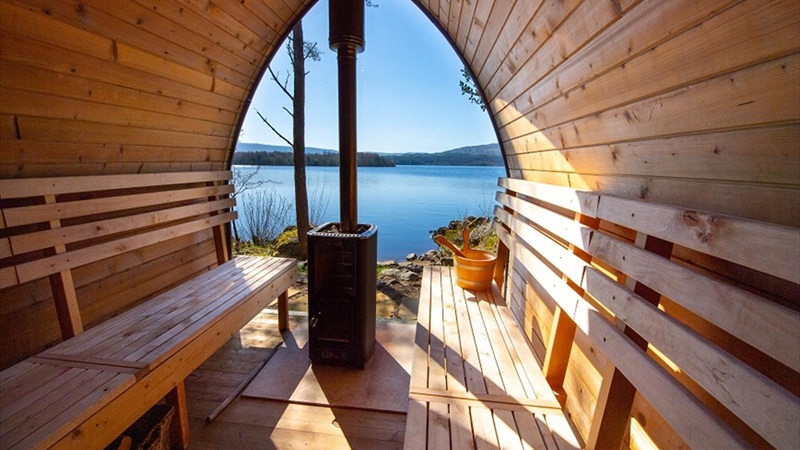
Cold Water Swimming in Jurmala offers an opportunity this autumn to experience swimming in chilly water while learning how to combine cold exposure with the warmth of a sauna safely. Free sessions are scheduled for 18 and 25 October in Majori, where participants can discover the basic principles of cold water swimming and enjoy a sauna visit. The events are organised by the association Aktīvs dzīvesveids as part of Jurmala’s Health Month. Participation is free, but advance registration is required.
October in Latvia is a time when water temperatures in the sea, lakes and rivers gradually decrease. For most people, the swimming season has already ended, but for others, autumn marks the beginning of regular cold water swimming.
This year, Cold Water Swimming in Jurmala can also be experienced through organised sessions that include a sauna visit. The events will take place on 18 and 25 October in Majori, at the end of Plūdu Street.
The value of these sessions goes beyond trying something new. They also highlight how the human body responds to sudden temperature changes and which safety precautions should be followed.
Cold Water Swimming in Jurmala – Discover Autumn Cold Water Bathing
Cold water swimming is not simply a quick dip in chilly water. It exposes the body to a significant temperature change within a short period.
For beginners, this experience may feel unfamiliar because cold water triggers an immediate physiological response. Breathing may become faster, while heart rate and blood pressure can increase.
It is therefore important to understand how to prepare, how to enter the water in a controlled manner and how to recognise the body’s reactions.
Organised sessions offer an opportunity to learn the basic principles of cold water swimming in a more structured environment than experimenting independently.
However, even during organised activities, every participant must consider their own health and physical capabilities.
Why Does Cold Water Swimming Become Popular in Autumn?
During autumn, water temperatures gradually decrease, and people who continue swimming after summer encounter increasingly colder conditions.
For some, this becomes a regular habit associated with spending time outdoors, self-discipline and personal wellbeing.
However, gradually cooling water does not automatically make cold water swimming safe.
Cold shock can cause an involuntary gasp, rapid breathing and other reactions that may be dangerous in water.
It is especially important not to overestimate personal abilities.
The aim should not be to remain in cold water for as long as possible. Safety, self-control and knowing when to stop are far more important.
Sauna and Cold Water Swimming – How Does the Body Respond?
Sauna bathing and cold water swimming are often mentioned together, but they affect the human body in different ways.
In a hot sauna, skin temperature rises, blood vessels near the skin dilate and sweating increases. The body attempts to release excess heat and maintain a stable internal temperature.
When entering cold water, blood vessels near the skin constrict as the body attempts to reduce heat loss.
A sudden transition from heat to cold can place additional strain on the cardiovascular system.
For this reason, visiting a sauna before cold water swimming does not guarantee that entering cold water will be safe.
Individual health, previous experience, water temperature and the body’s response to cold must all be considered.
Is It Necessary to Jump into Cold Water After a Sauna?
One common belief about sauna bathing is that a person should immediately plunge into cold water after heating up.
However, this is not necessary.
After a sauna, the body can cool down gradually in fresh air or under a moderately cool shower.
People without previous cold water swimming experience should be particularly careful to avoid suddenly jumping into cold water.
If someone chooses to enter cold water, they should do so gradually and maintain the ability to leave immediately.
If dizziness, chest pain, severe shortness of breath or other unusual symptoms occur, the activity should be stopped immediately and medical assistance sought when necessary.
Why Should You Never Swim in Cold Water Alone?
Cold water can cause unpredictable physiological reactions even in people who consider themselves physically fit.
One of the most important safety principles is therefore to avoid entering cold water alone.
Another person should be nearby and able to provide assistance or contact emergency services if necessary.
It is also important to choose a location with safe access to the water and an easy exit.
During autumn, slippery shores, waves, wind and changing weather conditions can create additional risks.
Even during organised sessions, participants should follow the instructors’ safety guidance and avoid overestimating their abilities.
Does Cold Water Swimming Really Improve Health?
Interest in cold water swimming has grown considerably in recent years.
Many people associate it with improved mood, increased alertness and emotional relaxation.
However, scientific evidence supporting its long-term health benefits remains limited.
Some studies suggest possible effects on wellbeing and certain physiological processes, but these findings cannot be applied equally to everyone.
Cold water swimming is not a medical treatment and cannot replace professional healthcare.
People with cardiovascular conditions, uncontrolled high blood pressure or other serious health problems should consult a healthcare professional before attempting cold water swimming.
Sauna Bathing Is Not an Endurance Competition
Although cold water swimming is often associated with testing personal endurance, a sauna visit does not necessarily need to involve extreme temperature changes.
A sauna can simply be a place to warm up, relax and spend time without rushing.
The experience depends not only on temperature but also on suitable humidity, ventilation, the length of each session and sufficient rest between visits.
There is no need to reach extremely high temperatures or plunge into cold water to enjoy sauna bathing.
It is far more important to adapt the experience to individual comfort and physical capabilities.
Jurmala’s Health Month Encourages New Activities
The planned cold water swimming sessions in Jurmala form part of a wider programme of Health Month activities.
Their value is not limited to the opportunity to try cold water swimming or visit a sauna.
They can also help participants develop a practical understanding of safety, preparation and the body’s responses to temperature changes.
This is particularly relevant at a time when social media increasingly features dramatic videos of cold water immersion without always explaining the potential risks.
Organised sessions give participants an opportunity to ask questions and make more informed decisions about whether this activity is suitable for them.
Cold Water Swimming in Jurmala – Dates and Location
Two free sessions are scheduled as part of Jurmala’s Health Month.
The first session will take place on 18 October, followed by a second session on 25 October.
Location: Majori, at the end of Plūdu Street, Jurmala, Latvia.
Organiser: Aktīvs dzīvesveids association.
Participation fee: Free.
Registration: Advance registration is required.
Before attending, participants are advised to confirm the starting time, availability and current participation requirements with the organisers.
Autumn Sauna and Cold Water Swimming – Safety Comes First
Autumn provides an opportunity to become more aware of how the body responds to changing weather conditions and temperatures.
However, neither sauna heat nor cold water should become a competition.
There is no need to remain in the water longer than others or test how much heat the body can tolerate.
Everyone has different experiences, health conditions and physiological responses.
The most valuable approach is based on understanding, gradual exposure and respect for safety.
Cold Water Swimming in Jurmala on 18 and 25 October will offer an opportunity to experience two very different temperatures – the warmth of a sauna and the coolness of autumn water. The main purpose of these sessions, however, is not to test endurance. It is to understand how the body responds to heat and cold, learn essential safety principles and discover how sauna bathing or cold water swimming can be adapted to individual needs and abilities.
