
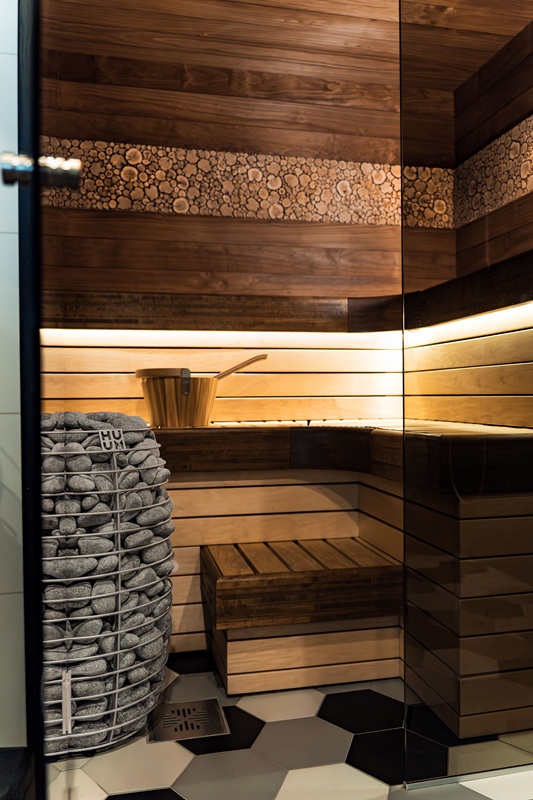
London Sauna Week 2026, taking place from 15 to 25 October, highlights sauna culture, public saunas and their growing significance in modern urban life. Over eleven days, the British capital hosts London Sauna Week, a programme bringing together sauna traditions, community initiatives and new approaches to relaxation. The event raises an interesting question: can the sauna, still regarded in many countries as a private retreat or a spa service, become as familiar a part of urban infrastructure as a park, library or sports centre?
Sauna culture in London is undergoing a transformation. In a city traditionally associated with a fast pace of life, busy public transport and a high concentration of people, smaller public saunas and community-led relaxation spaces are attracting increasing attention.
They offer an experience that differs from conventional spa complexes. Visitors come not only to warm up but also to meet others, escape the pressures of everyday life and share a sauna experience.
London Sauna Week 2026 brings these ideas together in a programme that explores both traditional sauna practices and the potential role of saunas in the social life of a modern city.
London Sauna Week 2026 – Eleven Days of Sauna Culture
London Sauna Week runs from 15 to 25 October, offering a variety of activities connected with sauna culture.
The programme includes sauna sessions, rituals, discussions and events that explore the sauna not merely as a relaxation service but also as a social and cultural phenomenon.
Among the activities are some unusual experiences, including sauna-related journeys along London’s canals and charitable initiatives.
This variety demonstrates how differently sauna culture can be interpreted.
For one person, a sauna is an opportunity to sit quietly in the heat. For another, it is a chance to discover a new tradition, while someone else may see it as a place to meet like-minded people.
London Sauna Week 2026 highlights this diversity, demonstrating that a sauna can be both a place for personal relaxation and a space for community gatherings.
Why Are Public Saunas Becoming Popular in Major Cities?
Modern cities offer countless entertainment opportunities, yet places for peaceful and informal social interaction are not always easy to find.
Cafés, restaurants and entertainment venues are often centred around consumption, while gyms primarily focus on physical activity.
A public sauna offers a somewhat different environment.
There is no need to be constantly occupied. Visitors can simply sit down, warm up, relax and, if they wish, talk to others.
Sauna bathing also has its own rhythm. Periods of heat are followed by rest, cooling down and returning to the sauna.
This process naturally slows the pace of everyday life.
That is why public saunas may appeal to people looking for ways to relax beyond conventional urban entertainment.
The Sauna as a Place Where People Meet
One of the most interesting qualities of a public sauna is its ability to bring different people together in the same space.
Inside a sauna, social distinctions are not always as visible as they are in everyday life. People share similar conditions, follow common rules and participate in the same experience.
In Finland, public saunas have historically played an important role in urban life, and they continue to function as social meeting places today.
Similar traditions exist in other countries, although sauna customs and rituals differ.
London’s initiatives suggest that this form of shared experience can also appeal to societies where sauna culture is not as deeply rooted in everyday life.
However, the attraction of a public sauna is not limited to conversation.
For some visitors, the opportunity to enjoy silence without feeling completely isolated from others is equally important.
Can Saunas Become Part of Urban Infrastructure?
One particularly interesting question raised by London Sauna Week concerns the place of saunas within public health and community infrastructure.
Cities have long invested in parks, sports facilities, swimming pools, libraries and other public spaces designed to serve residents.
Yet saunas are relatively rarely considered in this context.
If public saunas become accessible to a wider range of people, they could complement existing urban recreational facilities.
At the same time, the idea raises practical questions.
How can affordable admission prices be maintained? Where should saunas be located? How should visitor access be organised? How can hygiene, ventilation and fire safety requirements be met?
Public saunas require regular maintenance, reliable equipment and clear operating rules.
Therefore, the sauna as part of urban infrastructure is not merely an architectural or design question. It also concerns management, accessibility and the needs of the community.
From Sauna Rituals to Conversations About Health
The London Sauna Week programme demonstrates how diverse contemporary sauna culture has become.
On 15 October, an opening event and discussion took place at the WellNest centre in Bermondsey, exploring the potential role of saunas in public health. Topics included the effects of heat, community development and making saunas accessible to different groups.
On 17 and 18 October, Wellness Weekend featured discussions about the social importance of saunas, creativity, the interaction between heat and cold, and various sauna rituals.
The presentation of the book Naked Sweat also attracted attention. Its author, Mikkel Aaland, has spent decades researching and documenting bathing and sauna traditions around the world.
On 19 October, the Finnish Institute in the UK and Ireland, in cooperation with Lowlu, organised discussions inspired by the Finnish principle of saunarauha, meaning sauna peace.
These activities show that sauna culture is about more than temperature or the type of heater used. It also involves mutual respect, an understanding of traditions and human relationships.
London Sauna Week 2026 Also Offers a Sauna on the Water
One of the programme’s most unusual events is scheduled for 20 October.
During Cruise, Coffee, Sauna, participants are offered a journey on a sauna boat along a London canal, travelling from Westbourne Park to Paddington Basin.
The programme includes coffee, light refreshments and a sauna session after the boat has moored.
This concept demonstrates how varied the locations for sauna experiences can be.
Traditionally, a sauna is associated with a separate building, a rural property or a leisure complex. Today, however, mobile saunas, floating saunas and small public saunas in urban areas are becoming increasingly visible.
Naturally, such solutions require particular attention to fire safety, ventilation, structural stability and visitor safety.
Nevertheless, they expand our understanding of where a sauna can be located and how it can be used.
Sauna Traditions Can Help Build Communities
The preservation of traditions is another interesting aspect of public sauna development.
Sauna customs vary considerably between countries. In Finland, the peaceful atmosphere of the sauna is highly valued. In Latvia, sauna rituals and traditional whisking play an important role, while elsewhere the focus may be on guided heat and aroma experiences.
At the London event, these approaches meet within the same city.
This creates an opportunity to discover not only new forms of relaxation but also the cultural experiences of other nations.
At the same time, it raises the question of how to preserve the essence of traditions while adapting them to modern urban environments.
Not every sauna ritual is suitable for every room or group of visitors. People’s experience, health, safety and the meaning of the particular tradition must all be considered.
The development of sauna culture does not mean abandoning traditions. Instead, it can provide an opportunity to discover, preserve and pass them on in a new environment.
Can Public Saunas Improve the Wellbeing of City Residents?
For many people, visiting a sauna is associated with relaxation, warmth and an opportunity to temporarily escape everyday responsibilities.
However, when discussing the role of saunas in public health, it is important to distinguish personal experiences from scientifically established health benefits.
Research has examined associations between regular sauna bathing and various health outcomes, but not all observed benefits establish a direct cause-and-effect relationship.
Heat exposure is also not suitable for everyone. People with certain medical conditions may need individual precautions and, where appropriate, medical advice.
The value of a public sauna may extend beyond its physiological effects.
It can provide a space for peaceful relaxation, social interaction and shared leisure activities.
However, for saunas to become accessible public services, costs, hygiene, visitor safety and appropriate infrastructure must also be considered.
London’s Sauna Community Is Also Supporting Ukraine
The London Sauna Week 2026 programme includes a charity event, Sauna Aid Fundraiser, scheduled for 24 October.
Organised by The Saunaverse in Bow, the event features several saunas, guided heat rituals and a musical programme.
Its purpose is to raise funds to help deliver a Sauna Aid mobile sauna trailer to Ukraine.
This initiative illustrates another dimension of sauna culture: the possibility of using sauna communities for mutual support and charitable activities.
In this context, the sauna becomes more than a place for relaxation. It also serves as a means of bringing people together around a shared purpose.
What Could Latvia Learn from London’s Experience?
Sauna traditions are deeply rooted in Latvian culture, but the availability of public saunas and their role in local communities vary between municipalities.
In many places, sauna bathing is primarily offered as a private service at guesthouses, rural properties or leisure complexes.
This is an important part of the sauna industry, but London’s example encourages consideration of other possibilities.
Could a small public sauna become a regular meeting place for a local community? Could municipalities develop sauna facilities where visitors pay for an individual place rather than renting an entire sauna?
Such solutions could be interesting in both cities and smaller communities.
Naturally, demand, costs, management and safety requirements would need to be assessed.
However, the idea of public saunas does not conflict with Latvian sauna traditions. It could become one way of making these traditions more accessible to a wider audience.
A Sauna Is More Than a Building – It Is an Experience
London Sauna Week 2026 demonstrates that the development of sauna culture is not always driven by the latest technologies or impressive architecture.
Sometimes the most important factor is how people use the sauna itself.
A small wooden sauna in an urban neighbourhood can offer a completely different experience from a large spa complex. It can become a place people return to regularly, meet other visitors and develop their own sauna routines.
The sauna host, ritual leader and overall atmosphere also play an important role in this process.
The quality of a sauna cannot be judged solely by its temperature, heater power or building size.
What matters is how people feel inside it, whether the environment is safe and whether they want to return.
London Sauna Week 2026 Continues Until 25 October
London Sauna Week events continue until 25 October, offering a variety of sauna experiences and opportunities to discover the diversity of public saunas across the city.
The event demonstrates that interest in sauna culture is not limited to countries where sauna traditions have existed for centuries.
Even in major cities, people are looking for places where they can relax, meet others and briefly step away from the pressures of everyday life.
London Sauna Week 2026 raises an important question about the future of sauna culture. Will saunas remain primarily part of private leisure and spa services, or will they increasingly become accessible spaces within urban public life? London’s example shows that public saunas can bring together traditions, communities, relaxation and the modern urban environment. Perhaps this is also one of the directions in which Latvian sauna culture may develop in the future.
Sources
London Sauna Week 2026 – Official event programme, 15–25 October.
London Sauna Week – Public sauna events, sauna rituals and community initiatives.
Finnish Institute in the UK and Ireland – Saunarauha, the Finnish tradition of sauna peace.
The Saunaverse – Sauna Aid Fundraiser, charity event supporting Ukraine.
London Sauna Week – Cruise, Coffee, Sauna, sauna boat event on London’s canals.
